In the Land of Grey and Pink is considered by many to be a pinnacle release from Caravan. The album contains an undeniable and decidedly European sense of humor and charm. In addition, this would mark the end of the band's premiere lineup. Co-founder David Sinclair would leave Caravan to form Matching Mole with Soft Machine drummer and vocalist Robert Wyatt in August of 1971. As a group effort, In the Land of Grey and Pink displays all the ethereal brilliance Caravan created on their previous pair of 12" outings. Their blending of jazz and folk instrumentation and improvisational styles hints at Traffic and Family, as displayed on "Winter Wine," as well as the organ and sax driven instrumental introduction to "Nine Feet Underground." These contrast the decidedly aggressive sounds concurrent with albums from King Crimson or Soft Machine. In fact, beginning with the album's title, there seems to be pastoral qualities and motifs throughout. Another reason enthusiasts rank this album among their favorites is the group dynamic which has rarely sounded more singular or cohesive. David Sinclair's lyrics are of particular note, especially the middle-earth imagery used on "Winter Wine" or the enduring whimsy of "Golf Girl." The remastered version of this album includes previously unissued demos/alternate versions of both tracks under the titles: "It's Likely to Have a Name Next Week" and "Group Girl," respectively. The remastered disc also includes "I Don't Know Its Name (Alias the Word)" and "Aristocracy," two pieces that were completed, but shelved in deference to the time limitations imposed during the days of wine and vinyl. The latter composition would be reworked and released on Caravan's next album, Waterloo Lily. The 12-page liner notes booklet includes expanded graphics, memorabilia, and an essay penned specifically for the reissue.Τρίτη 23 Νοεμβρίου 2010
Caravan - In the Land of Grey and Pink (Superb British Prog-Rock 1971)
In the Land of Grey and Pink is considered by many to be a pinnacle release from Caravan. The album contains an undeniable and decidedly European sense of humor and charm. In addition, this would mark the end of the band's premiere lineup. Co-founder David Sinclair would leave Caravan to form Matching Mole with Soft Machine drummer and vocalist Robert Wyatt in August of 1971. As a group effort, In the Land of Grey and Pink displays all the ethereal brilliance Caravan created on their previous pair of 12" outings. Their blending of jazz and folk instrumentation and improvisational styles hints at Traffic and Family, as displayed on "Winter Wine," as well as the organ and sax driven instrumental introduction to "Nine Feet Underground." These contrast the decidedly aggressive sounds concurrent with albums from King Crimson or Soft Machine. In fact, beginning with the album's title, there seems to be pastoral qualities and motifs throughout. Another reason enthusiasts rank this album among their favorites is the group dynamic which has rarely sounded more singular or cohesive. David Sinclair's lyrics are of particular note, especially the middle-earth imagery used on "Winter Wine" or the enduring whimsy of "Golf Girl." The remastered version of this album includes previously unissued demos/alternate versions of both tracks under the titles: "It's Likely to Have a Name Next Week" and "Group Girl," respectively. The remastered disc also includes "I Don't Know Its Name (Alias the Word)" and "Aristocracy," two pieces that were completed, but shelved in deference to the time limitations imposed during the days of wine and vinyl. The latter composition would be reworked and released on Caravan's next album, Waterloo Lily. The 12-page liner notes booklet includes expanded graphics, memorabilia, and an essay penned specifically for the reissue.Σάββατο 20 Νοεμβρίου 2010
Calexico - Aerocalexico (Great collection 2001)
This is one of the better odds and ends collections you'll run across from any band -- with one or two more vocal tracks, and a pinch more of their mariachi-surf-Ennio Morricone signature sound; this tour/website disc would be indistinguishable from the band's official releases and arguably as good. That's because Aerocalexico is home to some of the band's best songs, B-sides, and compilation entries, like the hard-driving "Crooked Road & the Briar," the holiday song "Gift X-Change," covers of the traditional ("All the Pretty Horses"), Nick Drake's "Clothes of Sand," and yet another version of "Crystal Frontier" (the band's EP, Even My Sure Things Fall Through, features two more versions). Many of the vocal-less interludes may be little more than studio snippets that don't amount to too much taken out of context (eight of the 23 tracks are under one minute long), but woven together they form a cohesive quilt for the traditional songs, and some of the more elaborate instrumentals. Some of the soundscapes stand on their own quite well, offering a compendium of the Calexico stylebook: "Blacktop" features tape loops, synth wash, and a slightly distorted nylon-stringed guitar accompanying the grizzled voice of Southwest historian and author Lawrence Clark Powell; "Impromptu for Piano & Contrabass" is a moody, Erik Satie-inspired composition showcasing the classical leanings of bandleaders Joey Burns (contrabass), and John Convertino (piano); the desert noir-like "Sequoia" is an evocative, image-conjuring soundtrack; and the full-band treatment that Goldfrapp's "Humano" gets morphs it from an electronica James Bond homage into a jazz-inflected, instrumental rave-up. Calexico is one of indie rock's more imaginative musical collectives, and Aerocalexico is a wide-ranging document of their talents and influences, despite its humble origins.Andwella's Dream - World's End (Prog/Psych Rock 1970)
Andwella (also known as Andwella's Dream and The Method) was an obscure UK/Irish band in London formed in 1969. Specialising in progressive rock, it was fronted by Dave Lewis from Northern Ireland, who went on to write "Happy To Be An Island In The Sun" that was recorded by and became an international hit for Demis Roussos. Andwella released three LPs: Love & Poetry (Reflection 1969), World's End (CBS 1970) and People's People (CBS 1971). The track "World's End" was played frequently in the early 1970s on the then-underground FM station in Georgetown, WMAL. The original vinyl LP Love & Poetry has for some time been a valuable collector's itemDubrovniks - Audio Sonic Love Affair (1991 Aussie Rock)
The Dubrovniks are an Australian rock band formed in Sydney in 1987. The band's name was coined from the fact that founding members Roddy Radalj and Boris Sujdovic were born in Dubrovnik, a town in Croatia. Both Radalj and fellow founder James Baker had been founding members of Hoodoo Gurus (as Le Hoodoo Gurus). All three had earlier associations in Perth, Western Australian punk scene.The band were first established in August, 1986 when Radalj teamed up again with James Baker (by then ex-Beasts of Bourbon), together with Boris Sujdovic (ex-Rockets, The Scientists, Beasts of Bourbon) and Peter Simpson (Spectre's Revenge) as the Adorable Ones. Within a year the Adorable Ones had renamed themselves the Dubrovniks in honour of the fact that Radalj and Sujdovic were both born in the historical Croatian city of Dubrovnik. The band having to change names as there already was a Brisbane band with that name.
Citadel issued the singles "Fireball of Love" b/w "If I Had a Gun" in April, 1988 and a cover of Alvin Stardust's "My Coo Ca Choo" b/w "Girls Go Manic" in November, 1988. By the time the band recorded and issued the single "Speedway Girls" b/w "Freezin' Rain" in June, 1989 and their debut album, Dubrovnik Blues in August, 1989, Radalj had moved on to form a new band, the Punjabbers, comprising Radalj, Brett Ford (drums; ex-Kryptonics, Lubricated Goat), Tony Robertson (bass; ex-The Hitmen, New Christs, Naked Lunch) and Tony Thewlis (guitar; ex-Scientists) The Punjabbers only had one release, a single "Rock'n'Roll Loveletter" on Timberyard Records in December, 1988. Radalj then formed The Surfin' Caesars and recorded several albums.
Chris Flynn (guitar, vocals; ex-Headstones) eventually replaced Radalj, and the band signed to Mushroom Records. The band's releases on Mushroom, both produced by Kevin "Caveman" Shirley, maintained the revved-up, trashy rock'n'roll tradition. Audio Sonic Love Affair released September, 1990 included the singles "She Got No Love" b/w "Got this Far" (June, 1990) and "Love is on the Loose" b/w "Something's not Right in the World" (October, 1990). Glenn Armstrong (guitar; ex-Horny Toads-Girlies) replaced Simpson in 1990, and the band issued Chrome in June, 1992. The album produced two singles, "Saigon Rose" (February, 1992) and "French Revolution" (June, 1992). In between albums, Baker and Sujdovic toured and recorded with Beasts of Bourbon. In early 1991, the two severed their commitments to the Beasts in order to concentrate on The Dubrovniks. Mushroom dropped the band in 1993. German label, Normal, issued Medicine Wheel in Europe, and Mushroom Distribution Services (MDS) distributed it in Australia.
The Dubrovniks broke up in 1995 with Baker returning to Perth, where he joined power pop band, Satellite 5, with John Rushin (vocals), Phil Bradley (guitar; ex-Jackals), Doug Thomas (guitar; ex-Dagoes, Spikes) and Howard Shawcross (bass; ex-Elks, Howard I Know, Jackals). Sujdovic went on to form a new band, Black Dirt, together with Flynn, Chris Collins and Paul Loughhead.
Electronic Hole - Electronic Hole (Psychedelia 1970)
Last time we discussed Phil Pearlman, I stated he must've been some kind of musical genius, though I knew very little about him apart from the evidence of two highly obscure privately pressed albums. This time around I only know a touch more about his back-story, but this record of his from 1970 under the moniker the Electronic Hole proves he was indeed, a musical genius. Recorded in between the Beat of the Earth and the rural rock masterpiece Relatively Clean Rivers, the Electronic Hole bridges the gap between the drone raga rock of the former and the tunefulness of the latter. And it just may be the best of the three.Two long suites comprising seven songs of very forward-looking psychedelic rock quite unlike any I've ever heard before, effortlessly prefiguring the likes of Galaxie 500 and Spacemen 3. The Electronic Hole is somewhat more menacing than either of Pearlman's other incarnations, more heroin-y sounding perhaps, but from what I understand he was a teetotaler only prone to getting high on life and the fragrance of incense. Heroin seems an appropriate touchstone though as the only other group even coming close to the primal-ness of these songs were the Velvet Underground, and by 1970 even they'd primarily traded those baser emotions in for a sort of melancholic roots rock. On the final track, an early incarnation of one of the Relatively Clean Rivers songs appears, devoid of any ruralness with pure white noise in its stead. And I mean like Les Rallizes Denudes molten white noise. Superb.
Reissue of the extremely obscure 2nd Radish label album, originally issued in 1970. "Raw, noisy, droning and completely mesmerizing album recorded by Phil Pearlman between the first Beat of the Earth album and Relatively Clean Rivers. Pearlman assembled The Electronic Hole in 1969 strictly for personal use -- to audition musicians for his new band. To do this, and to add to his own collection of demos, he used local studios in off-hours thanks to his friendship with album engineer Joe Sidore. The result is entirely different from Beat of the Earth, as it abandons a freeform improvisational approach in favor of 'compositions', including a wild cover of Frank Zappa's 'Trouble Every Day'. Pearlman plays sitar to great effect on the album, and another track has the thickest wall of fuzz guitars imaginable -- an effect he achieved by running his Fender amplifier out of a child's chord organ ('sounded great for about two weeks, then it blew up!'). Few albums have such an eclectic yet appealing sound."
A raw, noisy, droning and completely mesmerizing album recorded by PHIL PEARLMAN between the first Beat of the Earth album and Relatively Clean Rivers. Pearlman assembled the ELECTRONIC HOLE in 1969 strictly for personal use to audition musicians for his new band." Recorded in local studios during off-hours, the album is entirely different from Beat of the Earth, as it abandons a freeform improvisational approach in favor of "compositions," including a wild cover of Frank Zappa's "Trouble Every Day." Pearlman plays sitar to great effect on the album, and another track has the thickest wall of fuzz guitars imaginable.
Τετάρτη 17 Νοεμβρίου 2010
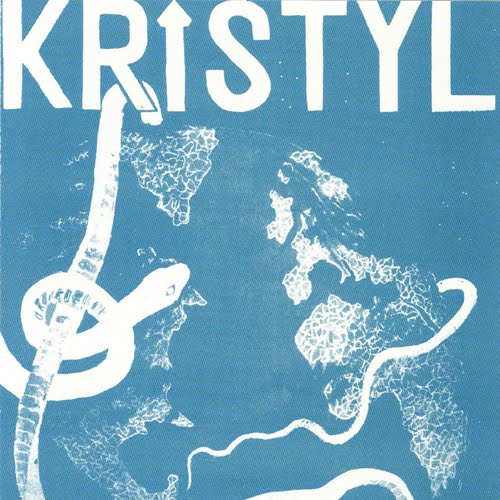
Kristyl - Kristyl (1975 Psychedelia from Kentucky)
Recorded at Allen-Martin Productions Louisville, Kentucky. This is a psych christian rock group Kristyl who released this LP in private pressings of only 200 in 1975. The music is reminiscent of Wishbone Ash from the Argus album. This album is homemade guitar psychedelia from Kentucky. A nice mixture of gentle dreamy passages, heavier acid guitar and wah-wah fuzz along with charmingly teenage vocals.Highly regarded local Christian 1970s melodic guitar-rock with an open late-1960s westcoast vibe, dual guitars and great organic playing/vocals all around. They have a very distinct sound which makes the tracks seem similar at first, but it opens up after some plays and remains that way. The best tracks such as "Deceptions of the mind" and "Valley of life" are truly monumental. Personal fave, one of the big ones in the style. Great sleeve design - note the drummers t-shirt. Originals were pressed on very thin vinyl, so most copies have slight bowl warps.
Timeless pinnacle of teenage, rural, Christian psychedelia. The consensus seems to be that this is a 1975 recording, but dealers always (accurately) describe it as sounding much earlier. The psychedelic playing on ëDeceptions of the Mindí often contrasts with the anti-drugs/sex lyrics: ìAlcohol and sex unclean, copping drugs all over the scene/What is it that we need, Lord itís love and itís for freeî. Kentucky canít have been an easy place to strike a deal to have this recorded, so maybe they felt they needed to put an anti-drugs message in here and there. The music is consistently wonderful, side 1 in particular, with side 2 ending with the beautiful ëMorning Gloryí. The dual guitars are laden with effects and full of interesting twists and turns. The singing is honest and clear. Not as crazed as Fraction, but in the same league of expressive, sincere musicianship. A beautiful, naÔve feeling pervades the whole LP, like they believed anything could happen, the world could change as a result of their sounds. For me, they were right. Why is the drummer wearing a shirt with a hash leaf on it, perhaps it says ìhash free zoneî underneath? The sleeve art is also top-ten, being a monochrome crudely drawn snake encircling the earth.
01 - Together
02 - Deceptions
03 - Like A Bird
04 - The Valley Of The Light
05 - Woman
06 - Blue Bird Blues
07 - Morning Glory
Langsyne - Langsyne (Very Good German Prog-Rock 1976)
This album is a validation of the notion that less can, indeed, be more. Recorded in 1976, just as the progressive rock era had passed its peak, it never got the attention it should have earned from fans of Amazing Blondel, the Strawbs, Jethro Tull, or Fairport Convention. The quietly, elegantly harmonized vocals and interlocked acoustic guitars that run throughout this record, ornamented with some flute, banjo, koto, and sitar, among other instruments, are not only hauntingly beautiful but memorable in a way that many louder bands never quite achieved. The lyricism just pours out of the performances and the music, and this trio laces its folk preferences with elements of Orientalism and other exotic attributes. Listening to this record (which was re-released on CD in the 1990s) today, while luxuriating in the music, one must get past the sad thought that this group never cut another album. If there was ever one failed prog rock group that deserved better, this was it.1. Medina (Frose)
2. Morning (Frose)
3. Changing (Nahle)
4. Cynghanedd (Nahle/Frose)
5. A Very Sarcastic Song (Frose)
6. Carnivore (Frose)
7. Mignon (Nahle)
bonus track
8. Lady Mary
Egbert Frose : gitarre, orgel, psalter, koto, maultrommel,
sitar, quintengitarre, sologitarre, gesang
Matthias Mertler : gitarre, glockenspiel, percussion, psalter,
banjo, sologitarre, basspedal, gesang
Ulrich Nahle : sologitarre, flote, slidegitarre, glockenspiel,
percussion, glocke, gesang